
Why the knee hurts even though you were not injured
The knee works mainly as a hinge and sits between two very mobile areas – the hip and the foot. If either of them is not doing its job, the knee has to compensate for movement it was not built for. The typical scenario looks like this: restricted hip rotation, weak glutes, plus running volume increased by ten or more kilometres in a week – and after a fortnight pain appears that does not go away with rest.
The second common mechanism is simply exceeding the tolerance of the tissue. The patellar tendon or the iliotibial band can take high loads, but they need time to adapt. When the stimulus grows faster than the ability to recover, the tissue signals it with pain.
What we check in the assessment
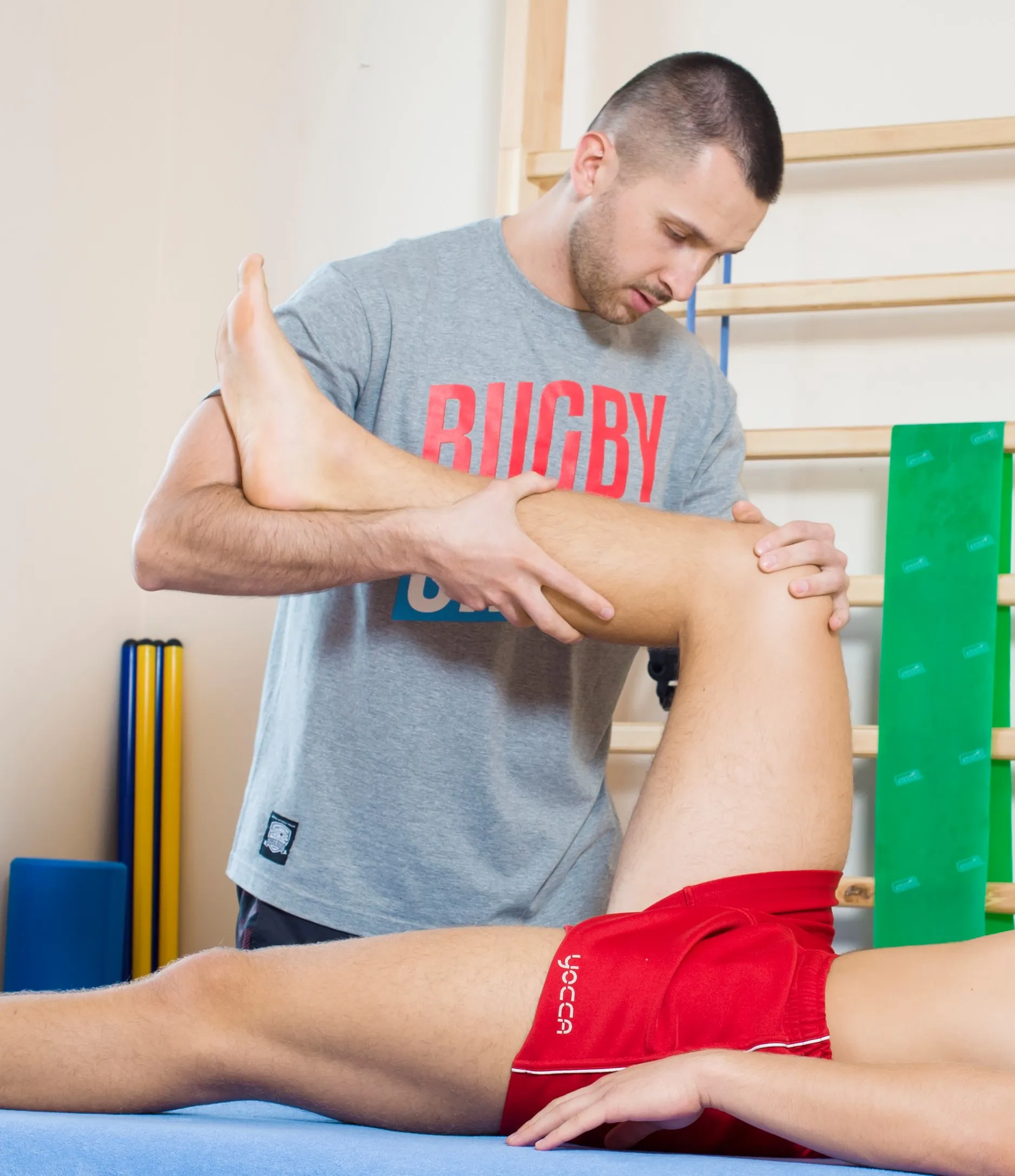
We start with the history: when it hurts, at which kilometre, after what change in training. Then we assess the mobility of the hip and ankle, the strength of the quadriceps and glutes, and test the structures inside the joint as well as the tendons. We also watch how you step down from a step and how you do a single-leg squat – that usually shows more than tests on the couch alone.
On that basis we know whether we are dealing with patellofemoral overload, a tendinopathy, an irritated iliotibial band, or signs that suggest structural damage and need a medical consultation. If the assessment shows that the problem comes from restrictions in the hip or from a previous ankle sprain, treatment will cover those areas too.
Treatment and getting back to load
The first stage is to bring the symptoms down enough for you to be able to exercise – we use manual therapy, soft tissue work and, where it is indicated, dry needling. But training is the real medicine here. Tendons and muscles get stronger under load, which is why from the first visits you get specific exercises with the weight and the number of repetitions written down.
For overload problems the realistic timeframe is usually 4–8 weeks, although clear relief normally comes sooner. We do not promise the pain will disappear after one visit. We promise that afterwards you will know where it comes from and what to do about it.
Back to sport without a relapse
The most common mistake is going back to full load on the day the pain stops. The tissue still needs a few more weeks to regain its capacity. So we finish with a plan: a graded increase in mileage or tonnage, two or three strength sessions a week kept in place, and a clear threshold at which you need to ease off. We set out the details at the visit.