
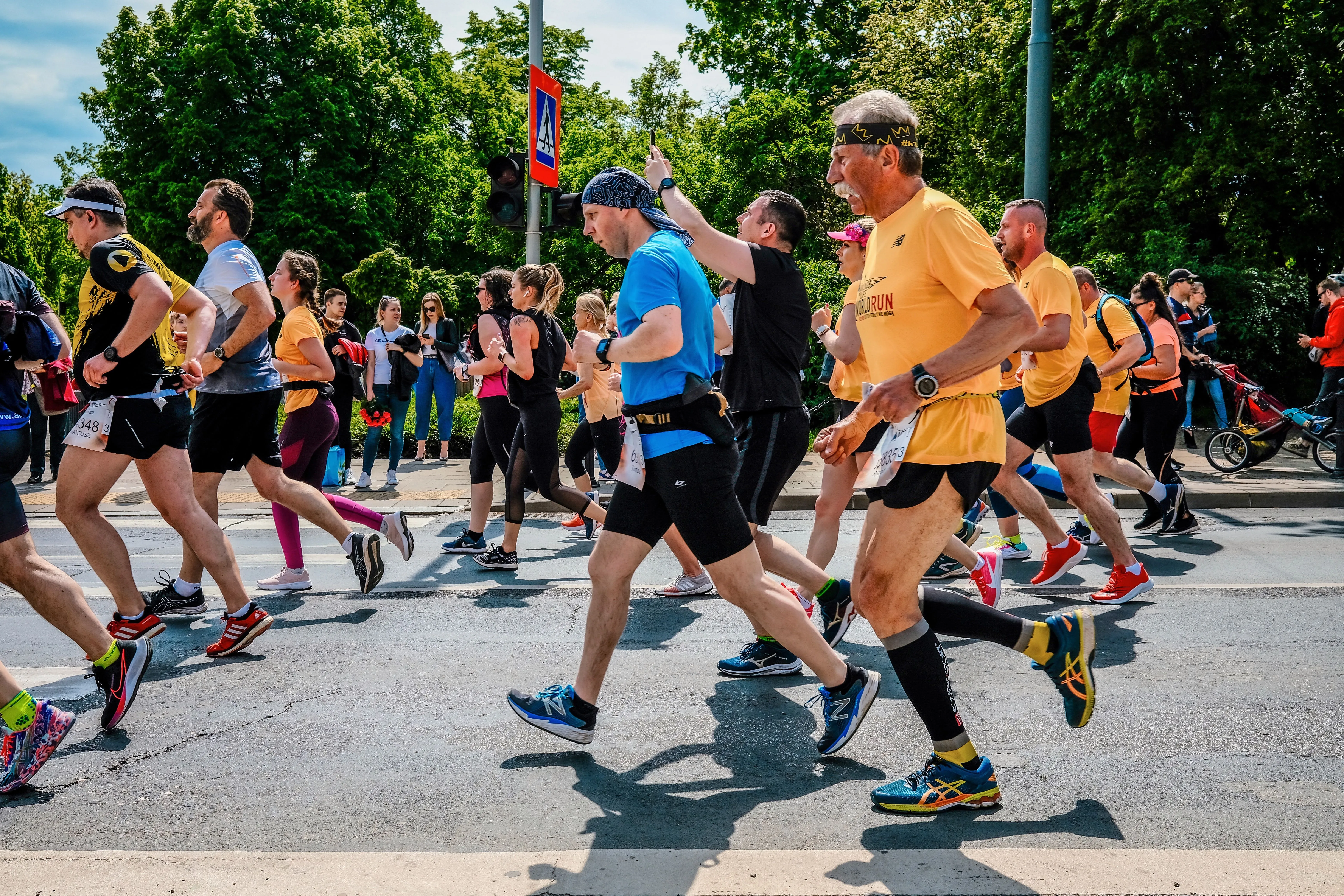
Why the hamstrings get injured when you sprint
The biceps femoris works hardest in the final phase of the swing, just before the foot goes down onto the ground. At that point it is being lengthened and at the same time braking the shin – that is, working eccentrically, at a long length and with high force. If the muscle is fatigued at that moment, or simply too weak in that range, some of the fibres tear. That is why the injuries happen most often during a sprint, at the end of a match, and in periods when speed work has suddenly increased.
It also explains the high risk of recurrence. The pain passes after a couple of weeks, the player goes back on the pitch, but the strength deficit at long muscle lengths remains – and with the first hard acceleration the story repeats itself.
Therapy and training hall in one place
The practice operates in the ZONE Fitness club at Al. Jerozolimskie 200, Warsaw Włochy. After the manual part we move straight to the hall, where we have cable machines, barbells, benches and space for running work. With a hamstring injury that is a practical difference: eccentric exercise needs specific equipment and supervision of technique, not a set of drawings to work from at home.
Over more than 15 years of practice we have worked with professional athletes and members of Poland’s national teams in team sports, where hamstring injuries are one of the most common causes of time out. We use the same approach with people who train recreationally.
When you can go back to full training
The return is not decided by the absence of pain alone. We check the strength of the knee flexors against the other leg, the response to tests in a lengthened position of the muscle, and how the leg copes with each successive level of running speed. Only when those are repeatable do we go back to training without restrictions. Eccentric work stays in the plan for good, though – it is the most effective known way of preventing recurrence in this muscle group.
What to expect at the visit
We start with the history – how the injury happened, the moment the pain appeared, any earlier problems with that leg. Then we assess tenderness on pressure, range of motion and strength in several positions, to judge the scale of the damage and to rule out situations that need a medical opinion. At the same visit we treat you and hand over a plan for the first few days.
The follow-up sessions are mainly strength work and a gradual increase in running speed. If the problem is part of a wider picture of overload, we deal with the other links too – the hip, the calf or the Achilles tendon. You can read more about our approach with athletes on the sports physiotherapy page.