
Why the surgery alone is not the end of treatment
The surgeon rebuilds the ligament, but will not rebuild the thigh strength or the movement control that disappear within a few weeks of the injury. The graft remodels and matures over many months, and at the same time the quadriceps can lose several centimetres of girth. It is exactly this deficit in extensor strength and the lack of control on landing that are the most commonly described risk factors for a repeat injury – and they are what we work on for longest.
In practice that means rehabilitation after ACL has two completely different phases. The first happens on the couch: extension, swelling, kneecap mobility, walking. The second happens in the gym, with loads that genuinely build muscle.
Therapy and gym in one building
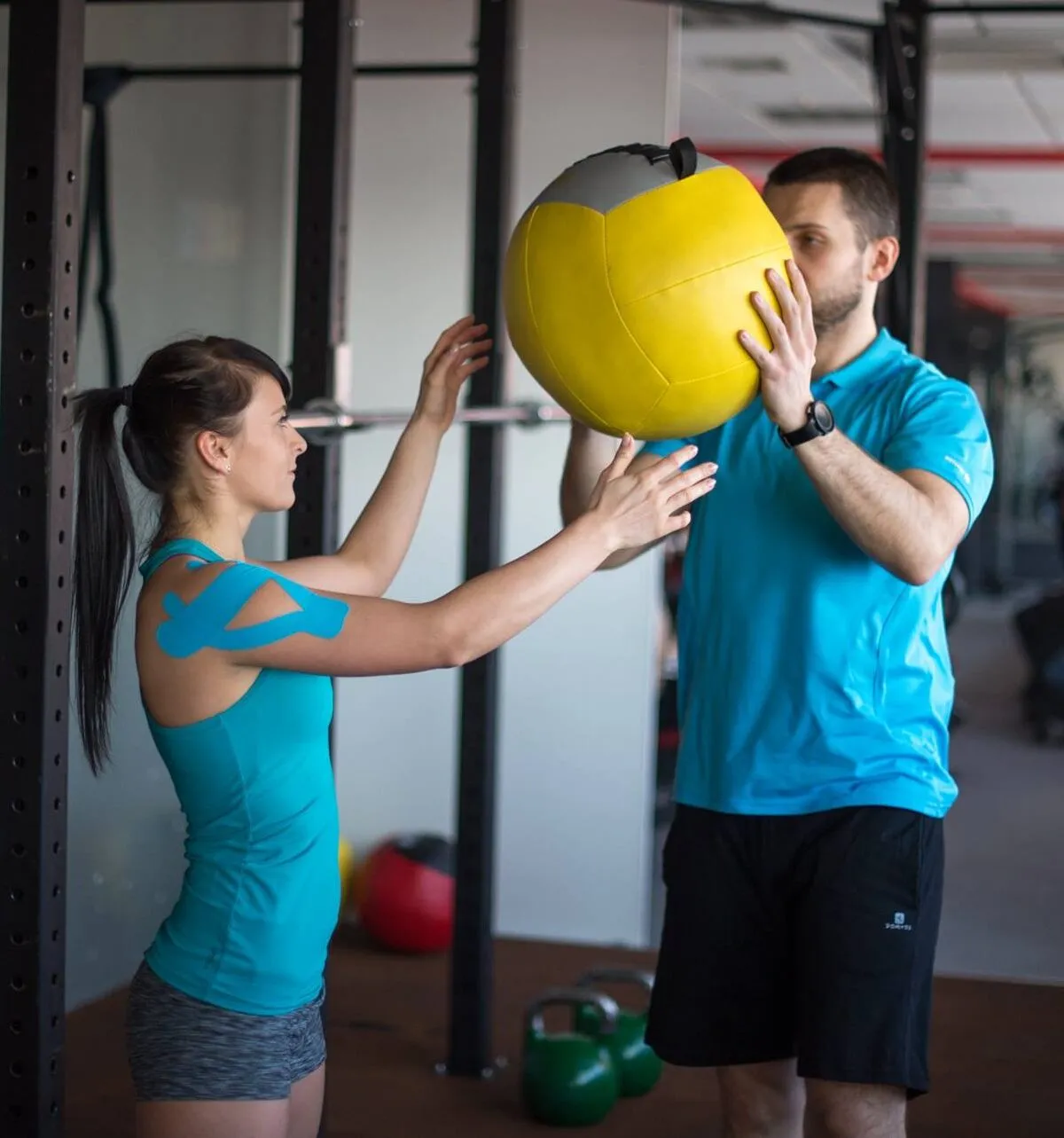
The practice is based in the ZONE Fitness club at Al. Jerozolimskie 200, Warsaw Włochy. For knee rehabilitation that has a concrete advantage: after the manual part we move onto the gym floor and go straight to the equipment you need – cable machines, the Smith machine, dumbbells, platforms. You do not have to find a separate place for medical training, or learn the exercises in the abstract and then try to reproduce them in another club.
The practice is run by a physiotherapist and medical trainer with over 15 years of experience, including work with professional athletes and members of Poland’s national teams in team sports – that is, in a setting where ACL injuries happen most often and where return-to-play criteria are taken seriously.
Return-to-sport criteria instead of a calendar
The question “when will I be back on the pitch” usually comes up at the first visit. The honest answer is: when the knee passes the tests. We look at strength symmetry of the extensors and flexors, at single-leg hop results in several variants, at the quality of landing, and at how the leg behaves under fatigue. Only a repeatable result above 90% compared with the healthy leg gives grounds for full training.
Along the way we often have to deal with the rest of the chain too – the hip, the foot, and not uncommonly the Achilles tendon or the hamstrings, which take over the work from a weakened knee.
What the first visit looks like
We start with the history: the type of graft, any associated damage, the operating surgeon’s instructions and how your rehabilitation has gone so far. Then we assess range of motion, swelling, quadriceps function and the way you walk. At the same visit we treat you and set a plan for the coming weeks, along with a set of exercises to do at home. Details on how to get here and how to book are on the Contact page.