
Warsaw Włochy · Aleje Jerozolimskie 200 (ZONE Fitness) Mon–Fri 9:00–21:00 · Sat 9:00–20:00

Lower back pain – physiotherapy Warsaw Włochy

Pain in the lower back is the most common reason people book a visit with us. In most cases it does not come from a slipped disc, but from overload and a loss of movement control – and it responds well to therapy combined with properly selected exercise.

First visit (assessment + treatment, 45 min) – 200 zł · Al. Jerozolimskie 200, Warsaw Włochy · usually 3–6 weeks

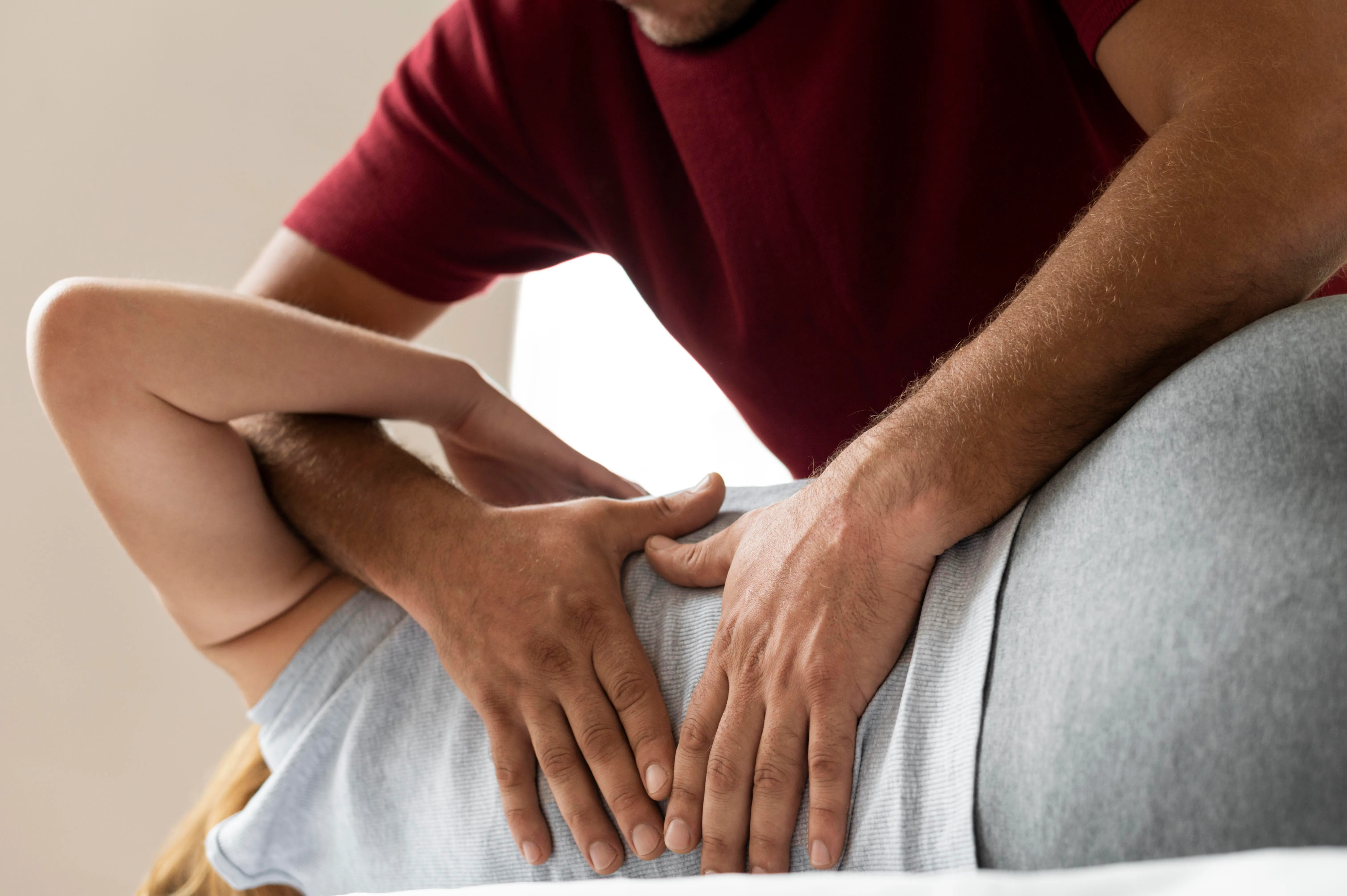
Manual therapy of the lumbar spine – Fizjo-Fan Warsaw Włochy
Symptoms

Does this sound familiar?

If you recognise several of the symptoms below, it is worth coming in for a functional assessment.

  • Pain in the lower back, worse when bending forwards or straightening up
  • Morning stiffness that eases once you get moving
  • Pain after sitting for a long time, driving or standing
  • A locked back after a sudden movement or after lifting something heavy
  • Recurring episodes of pain that settle and then return every few months
  • Tension in the muscles along the spine, a feeling of being pulled tight

Most common causes

  • Overload from sedentary work and too little movement
  • Technique errors in the gym (deadlift, squat, rowing)
  • Poor control of the deep trunk muscles
  • Sudden effort without preparation – carrying, moving house, working in the garden
  • Limited mobility of the hips and thoracic spine, which the lumbar spine has to make up for
  • Stress and long-standing muscle tension

Where lower back pain comes from

The lumbar spine transfers load from the trunk to the pelvis, so it reacts to everything happening above and below it. When the hips lose mobility and the thoracic spine stiffens up from sitting, the lower back starts making up for both. Add weak glutes and trunk muscles, and one careless movement is enough for pain to appear.

That is why therapy aimed only at the painful spot often works for a few days. Lasting improvement means changing whatever is overloading the area.

Is pain radiating into the leg always sciatica?

No. Pain can radiate into the buttock and thigh when the facet joints are irritated, or from trigger points in the gluteal muscles. We talk about sciatica when the pain runs along the sciatic nerve and usually travels below the knee – often, though not always, with altered sensation or loss of strength. Telling these situations apart is one of the basic jobs of the assessment at the first visit.

What to expect

At the first visit we take a history and carry out a functional assessment, and then move straight on to treatment – you do not pay separately for a consultation on its own. You leave knowing what is causing the problem, with specific advice for the days ahead.

Over the following weeks we gradually shift the emphasis from treatment to movement: from exercises that control position, through strengthening, to learning to lift safely and returning to full loads in training.

Desk work and back pain

Sitting itself does not wreck your spine – the problem is staying still. The body does not like holding one position for eight hours, however good the chair is. The simplest change you can make from tomorrow is to stand up every 30–40 minutes and do a few movements in the opposite direction to the one you hold at the computer. The rest – choosing exercises and setting up your workstation – we sort out at the visit.

How treatment works

How we help with this problem

We match the approach to what the assessment shows – it is not the same set of treatments for every patient.

Book your first visit
  1. Functional assessmentWe check which movements provoke the pain, how the hips and thoracic spine work, and whether the symptoms travel into the leg. That tells us whether we are dealing with an overload problem, a radicular one or a joint problem.
  2. Reducing the symptomsManual therapy, soft tissue work and, where needed, dry needling – so that you regain freedom of movement and break the cycle of pain and tension.
  3. Rebuilding control and strengthExercise matched to the stage you are at – first control of position and breathing, then strengthening the glutes and trunk muscles, and learning to lift safely.
  4. Preventing recurrenceCorrecting your technique in training, setting up your workstation and a short set of home exercises – so the pain does not come back in three months.
FAQ

Lower back pain – FAQ

Does back pain mean disc disease?
In most cases it does not. Changes in the intervertebral discs show up on imaging in people with no symptoms at all, and pain more often comes from overloaded muscles and joints. The diagnosis is made by clinical examination, not by the scan alone.
With back pain, is it better to rest or to move?
Apart from the first few hours after an acute episode, moving is clearly better. Long periods lying down make recovery slower. What matters is movement matched to what you can currently do – and that is what we work out at the visit.
How many visits are needed for lower back pain?
For a recent overload usually 3–6 visits, often with a clear improvement after the first or second. Symptoms that have been there for years take longer, mainly on the exercise side.
Can I train during treatment?
Usually yes, with the exercises modified. Stopping training altogether is rarely necessary – normally it is enough to change the range of motion, the load, or to swap a few exercises for a while.
How much does a visit cost?
First visit (assessment + treatment, 45 min) – 200 zł, follow-up visits (50 min) – 220 zł. The full price list is on the Prices page.
Online booking 24/7

Lower back pain – book a visit, Warsaw Włochy

Online booking via Booksy takes a minute. You can also just call – if we are with a patient, we will call you back.

Getting here

How to find us

The clinic is located inside the ZONE Fitness club at Aleje Jerozolimskie 200 – entrance from the car park. There is a changing room on site (padlock available at reception), so you can come straight from work or training.

  • Address: Aleje Jerozolimskie 200, 02-486 Warsaw (Włochy district)
  • By car: parking next to the building – first 3 hours free (entrance from Kleszczowa St. and Al. Jerozolimskie).
  • By bus: Łopuszańska 02/04 and Zajezdnia Kleszczowa stops – 2–4 min walk.
  • Nearby: Włochy, Ochota, Ursus, Wola, Raków, Okęcie – easy access along Al. Jerozolimskie; 15 min from Chopin Airport.
Open in Google Maps Contact & first visit

The information on this page is for general guidance only and does not replace a consultation with a physiotherapist or doctor. Your treatment is always decided by what the assessment at your visit shows.

Message us